

This post contains paid and/or affiliate links. I make a small commission at no extra cost to you. Please see our Privacy Policy.
Look, I get it. When someone mentions the Ten Commandments, you might picture Charlton Heston with stone tablets or that dusty poster in your grandmother’s kitchen. But here’s the thing—these ancient rules have shaped Western civilization for thousands of years, and they’re way more relevant than you’d think.
So what exactly are they? The Ten Commandments are a set of biblical principles given to Moses on Mount Sinai that serve as the foundation of Judeo-Christian ethics. Think of them as the original “how not to be a terrible person” guide, delivered directly from God according to religious tradition.
Whether you’re religious, spiritual, or just curious about where modern morality comes from, understanding these commandments gives you serious insight into how billions of people view right and wrong.
Where Do These Rules Come From?
The story goes like this: Moses climbs up Mount Sinai, has a divine encounter, and comes down with two stone tablets containing God’s instructions for humanity.
You’ll find these commandments written in Exodus 20:2-17 and again in Deuteronomy 5:6-21 (because apparently, important things bear repeating).
This wasn’t just some casual suggestion list. According to biblical tradition, this was Divine Revelation—God literally spelling out the non-negotiables for righteous living.
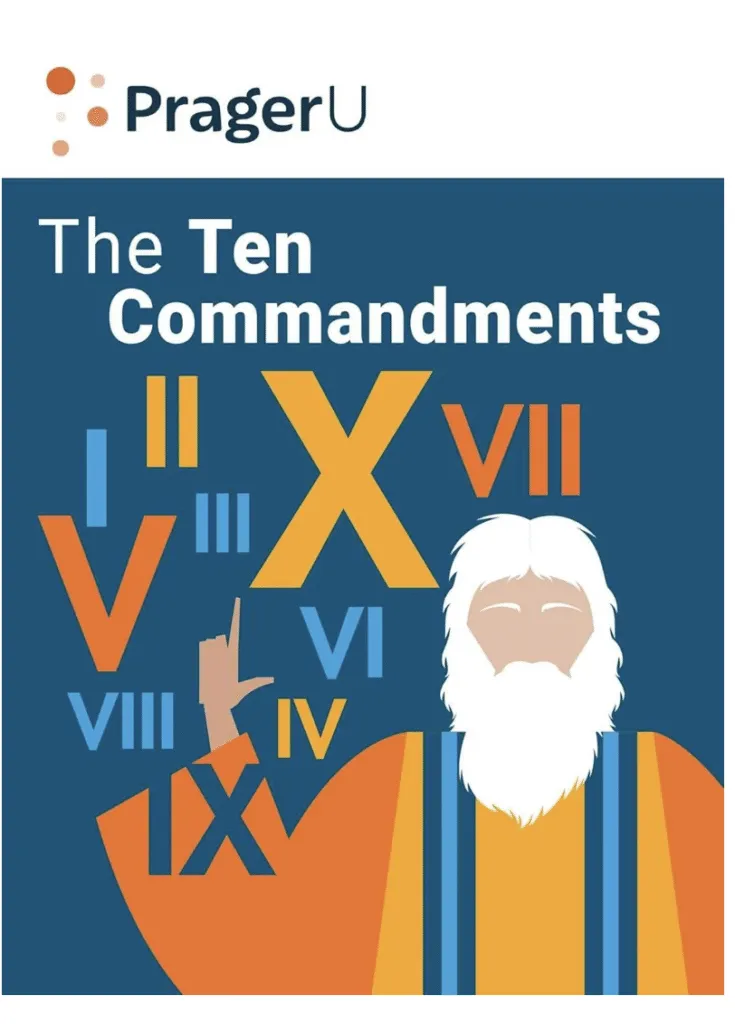
The Full List: What Are We Working With?
Here’s the thing about the Ten Commandments—they come in both director’s cut and TL;DR versions. Let me break down both for you.
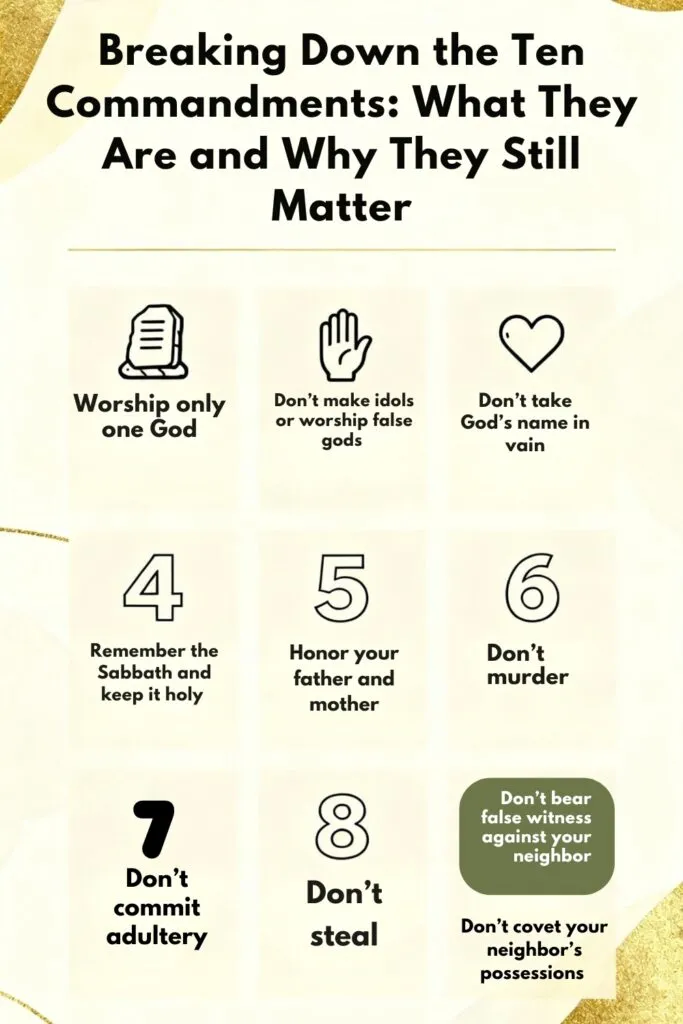
The Long-Form Version (For People Who Like Details)
- Worship only one God – No splitting your devotion
- Don’t make idols or worship false gods – That golden calf incident? Yeah, this is why
- Don’t take God’s name in vain – More than just avoiding curse words
- Remember the Sabbath and keep it holy – Your ancient permission slip to actually rest
- Honor your father and mother – Even when they’re embarrassing
- Don’t murder – Pretty straightforward, honestly
- Don’t commit adultery – Keep your commitments
- Don’t steal – Someone else’s stuff isn’t yours
- Don’t bear false witness against your neighbor – Lying about others is a no-go
- Don’t covet your neighbor’s possessions – Stop wanting what isn’t yours
The Short-Form Version (For the Skimmers)
- Worship one God
- Avoid idols
- Respect God’s name
- Keep Sabbath holy
- Honor parents
- No murder
- No adultery
- No stealing
- No lying
- No coveting
Notice something? The first few focus on your relationship with God, while the rest zero in on how you treat other people. It’s basically a two-part system: divine connection + human decency = moral principles for life.
Wait, Why Do Different Groups Number Them Differently?
Here’s where it gets mildly confusing (and honestly, kind of fascinating). Different religious traditions count these commandments differently, even though the actual content stays the same.
Protestant Christians typically use the straightforward numbering I listed above—ten distinct commandments, nice and clean.
Jewish tradition combines some commandments and rearranges others. They actually group “don’t murder, commit adultery, steal, bear false witness, or covet” into one mega-commandment. Bold move.
Catholics split the last commandment into two separate ones: “don’t covet your neighbor’s wife” AND “don’t covet your neighbor’s stuff.” They’re very specific about keeping your envy organized.
Does this matter practically? Not really. Everyone’s working from the same source material—they just organize the playlist differently.
What Do These Commandments Actually Mean for Real Life?
Let’s be real: these aren’t just dusty religious rules. They’re the foundation of Judeo-Christian ethics that influenced Western legal systems, moral philosophy, and basic social contracts.
Think about it:
- Don’t murder? That’s literally the basis of criminal law
- Don’t steal? Property rights in a nutshell
- Don’t lie about others? The entire concept of perjury and defamation
- Honor your parents? Family responsibility and elder respect
Even if you’re not religious, you’re probably living by most of these principles without thinking about it. They’ve become so embedded in society that we forget they had to be spelled out in the first place.
The Bigger Picture: Why Should You Care?
Here’s my honest take: whether you view these as divine commands or ancient wisdom literature, the Ten Commandments offer something we desperately need—a framework for righteous living that goes beyond “do whatever feels good.”
They push back against selfishness (no coveting), violence (no murder), dishonesty (no false witness), and broken commitments (no adultery). They create space for rest (Sabbath), family bonds (honor parents), and spiritual connection (worship one God).
In a world where everyone’s making up their own rules, these commandments say, “Actually, some things are objectively wrong, and here’s why.”
You don’t have to agree with every interpretation or religious application. But understanding these principles helps you grasp the moral foundation that shaped Western civilization and still guides billions of people today.
The Bottom Line
The Ten Commandments are ancient moral principles that continue to influence how we think about ethics, law, and human relationships. They’re part divine directive (according to believers) and part timeless wisdom about not being awful to each other.
You can study them from a religious perspective, a historical lens, or pure philosophical curiosity. Either way, they’re worth understanding—not because you need to follow them religiously, but because they reveal fundamental truths about what makes communities function and what separates humans from chaos.
And honestly? “Don’t murder, don’t steal, don’t lie” is pretty solid advice, regardless of where it came from.
FAQ
Where are the Ten Commandments found in the Bible?
You’ll find the Ten Commandments in two spots: Exodus 20:2-17 and Deuteronomy 5:6-21. Both versions tell the same story—God giving these commandments to Moses on Mount Sinai. Deuteronomy basically retells the story with slight variations in wording, but the core principles stay the same. Think of it as the “remix” version that emphasizes different details.
Are the Ten Commandments only for religious people?
Not really. While they’re definitely rooted in Judeo-Christian ethics and come from religious texts, their influence extends way beyond churches and synagogues. Modern legal systems, moral philosophy, and basic social norms all borrowed heavily from these principles. You don’t have to believe in divine revelation to appreciate that “don’t murder” and “don’t steal” are pretty universally solid rules for society.
Why do Catholics, Protestants, and Jews number the commandments differently?
Great question! They all work from the same biblical text, but they organize it differently. Protestants keep them as ten distinct commandments. Catholics split the “don’t covet” commandment into two separate ones (coveting your neighbor’s spouse vs. their stuff). Jews combine several commandments into single entries and rearrange the order. It’s like three people organizing the same grocery list differently—same items, different systems.
What’s the difference between the “moral principles” and just being a good person?
Here’s the thing: these aren’t just suggestions for being nice. The Ten Commandments present themselves as divine revelation—absolute moral standards from God, not human opinions. They claim authority beyond “this seems like a good idea.” Whether you buy into that authority or not, they provide a fixed framework for righteous living rather than flexible, situation-dependent ethics. They say some things are always wrong, regardless of circumstances or cultural shifts.
Can you break the Ten Commandments and still be a good person?
Well, that’s the million-dollar question, isn’t it? From a religious perspective, breaking these commandments means falling short of God’s standard, though most traditions also emphasize forgiveness and redemption. From a secular view, you might argue that someone who breaks one commandment (say, not honoring the Sabbath) but lives compassionately otherwise is still “good.” But let’s be honest—if you’re breaking the biggies like murder, theft, or lying, you’ve got bigger problems than philosophical debates about morality.